
BBQ sauce bottle sizes should be selected by use case, sauce viscosity, filling process, headspace, closure route, carton count and pallet efficiency. An 8 oz bottle works for samples and specialty retail, 12 oz and 16 oz formats cover most grocery and household grilling programs, and 32 oz foodservice bottles reduce refill frequency for kitchens, restaurants and distributor supply.
The practical decision is not only the printed capacity on the label. Thick BBQ sauce, tomato solids, sugar, smoke flavor, oil phases and spice particles change fill accuracy, sauce recovery, squeeze force, cap opening and residue left in the bottle. A size that looks cheaper per unit can become expensive if it lowers pallet density, creates poor squeeze recovery or increases carton weight beyond a comfortable handling range.
| Bottle Size | Metric Equivalent | Best Fit | Common Format | Engineering Watchpoint |
|---|---|---|---|---|
| 8 oz | 237 ml | Specialty retail, trial flavors, gift packs and premium small-batch BBQ sauce. | Small glass ringneck, clear PET or compact squeeze bottle. | Label area, unit price per ml and enough headspace for filling accuracy. |
| 12 oz | 355 ml | Standard grocery shelf, private-label BBQ sauce and light household grilling. | Ringneck, stout, oval PET or glass-style retail bottle. | Shelf facing, cap compatibility and carton count per master case. |
| 16 oz | 473 ml | Family retail size, heavier home use and value-positioned BBQ sauce. | Stout, round PET, oval bottle or squeezable BBQ format. | Filled weight, squeeze force, label panel and pallet load. |
| 32 oz | 946 ml | Foodservice kitchens, restaurants, catering, back-of-house refills and bulk condiment programs. | Wide-mouth HDPE/PET container, large squeeze bottle or foodservice sauce container. | Grip, refill speed, carton compression and freight cube utilization. |
Retail vs Foodservice: Why the Same BBQ Sauce Needs Different Bottle Sizes
Retail BBQ sauce packaging is judged at shelf level first. The bottle has to look full, carry a readable front label, fit the shelf height, survive distribution and feel reasonable in the consumer's hand. For most retail programs, 12 oz (355 ml) and 16 oz (473 ml) are the strongest starting points because they balance perceived value, shelf blocking and normal household consumption.
Foodservice packaging works under a different pressure. A kitchen line cares about refill frequency, cap cleanliness, one-hand handling, carton opening speed, waste at the end of use and storage space. A 32 oz (946 ml) format can reduce changeovers and refill labor, but only if the bottle is easy to grip, dispense and store without leakage.
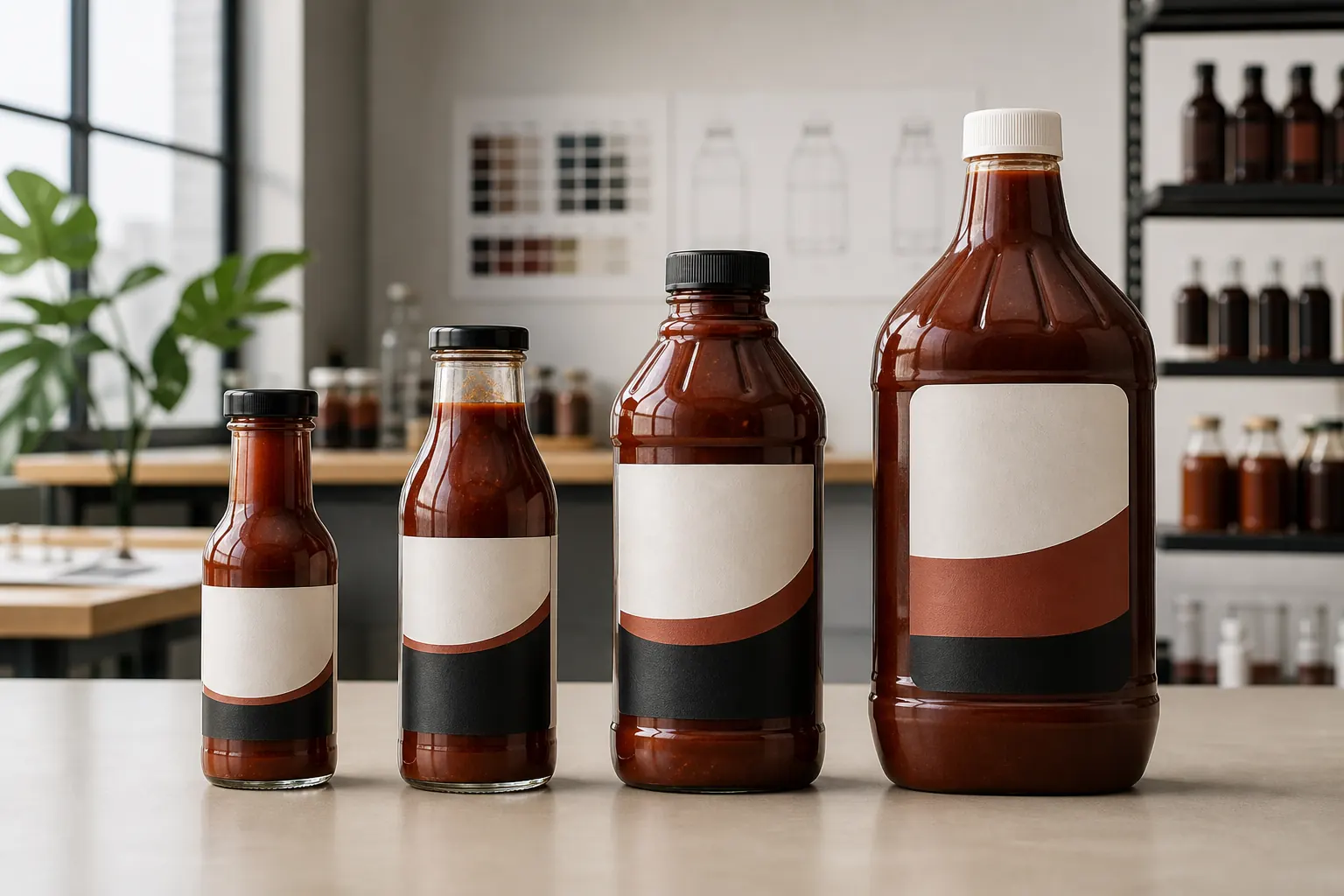
An 8 oz (237 ml) format can be useful when the sauce is premium, spicy, seasonal or bundled into a multipack. It is not usually the lowest-cost route per ml, but it can reduce trial friction and avoid slow movement for specialty flavors.
| Channel | Practical Size Range | What the Package Must Solve | Best Sample Review |
|---|---|---|---|
| Specialty retail | 8 oz to 12 oz | Premium feel, flavor trial, label clarity and small-batch shelf story. | Filled appearance, label area and cap route. |
| Grocery retail | 12 oz to 16 oz | Shelf value, consistent facing, normal household usage and case efficiency. | Shelf tray, barcode readability and carton count. |
| Club or value retail | 16 oz to 32 oz | Higher fill value, stronger bottle body and stable pallet load. | Compression, filled weight and grip comfort. |
| Foodservice | 32 oz and larger routes | Refill speed, lower packaging cost per ml, handling durability and closure cleanliness. | Back-of-house handling, cap leakage and storage orientation. |
12 oz BBQ Sauce Bottles: Balanced Grocery Shelf Format
A 12 oz BBQ sauce bottle often fits the center of the retail decision. It gives more perceived value than an 8 oz bottle while keeping filled weight, shelf height and carton count manageable. For private-label BBQ sauce, regional retail programs and classic grill sauce lines, 12 oz can support strong shelf rotation without making the bottle feel oversized.
This size is commonly paired with ringneck, round, stout or oval-style bottle families. A 38 mm neck route is common in many sauce projects, but the actual finish code, thread profile, sealing land and cap liner must be confirmed against the selected bottle mold. Neck finish cannot be assumed from the capacity alone.
For thick BBQ sauce, the 12 oz route should be tested for pour start, cling on the shoulder and residue after normal use. A bottle that empties poorly may create consumer waste even if the size looks right on the shelf.
| 12 oz Design Area | What to Check | Reason |
|---|---|---|
| Label panel | Flat or gently curved area between shoulder and heel. | Protects front branding, barcode readability and compliance copy. |
| Neck and cap | Thread fit, liner compression, reducer or flip-top opening. | Controls leakage and dispensing accuracy. |
| Carton count | Bottles per inner carton and master carton gross weight. | Affects handling, storage and landed cost. |
| Shelf tray | Facing width, height and bottle stability. | Keeps the retail set clean and repeatable. |
| Sauce recovery | Residual sauce left after normal consumer-style use. | Prevents perceived waste and poor final-use experience. |
16 oz BBQ Sauce Bottles: Family Size, Value Positioning and Heavier Filled Weight
A 16 oz BBQ sauce bottle gives a full pint (473 ml) of sauce and is useful when the product is positioned for frequent grilling, family use or value retail. It can also work well for brands that want a stronger presence on shelf without moving into bulky foodservice packaging.
The added fill weight changes the package mechanically. A taller or wider bottle needs enough base stability for conveyors and shelves, enough shoulder strength for capping and enough wall control to avoid denting or paneling. If the bottle is squeezable, grip force and bounce-back become more important because the consumer may squeeze the package many times before it is empty.
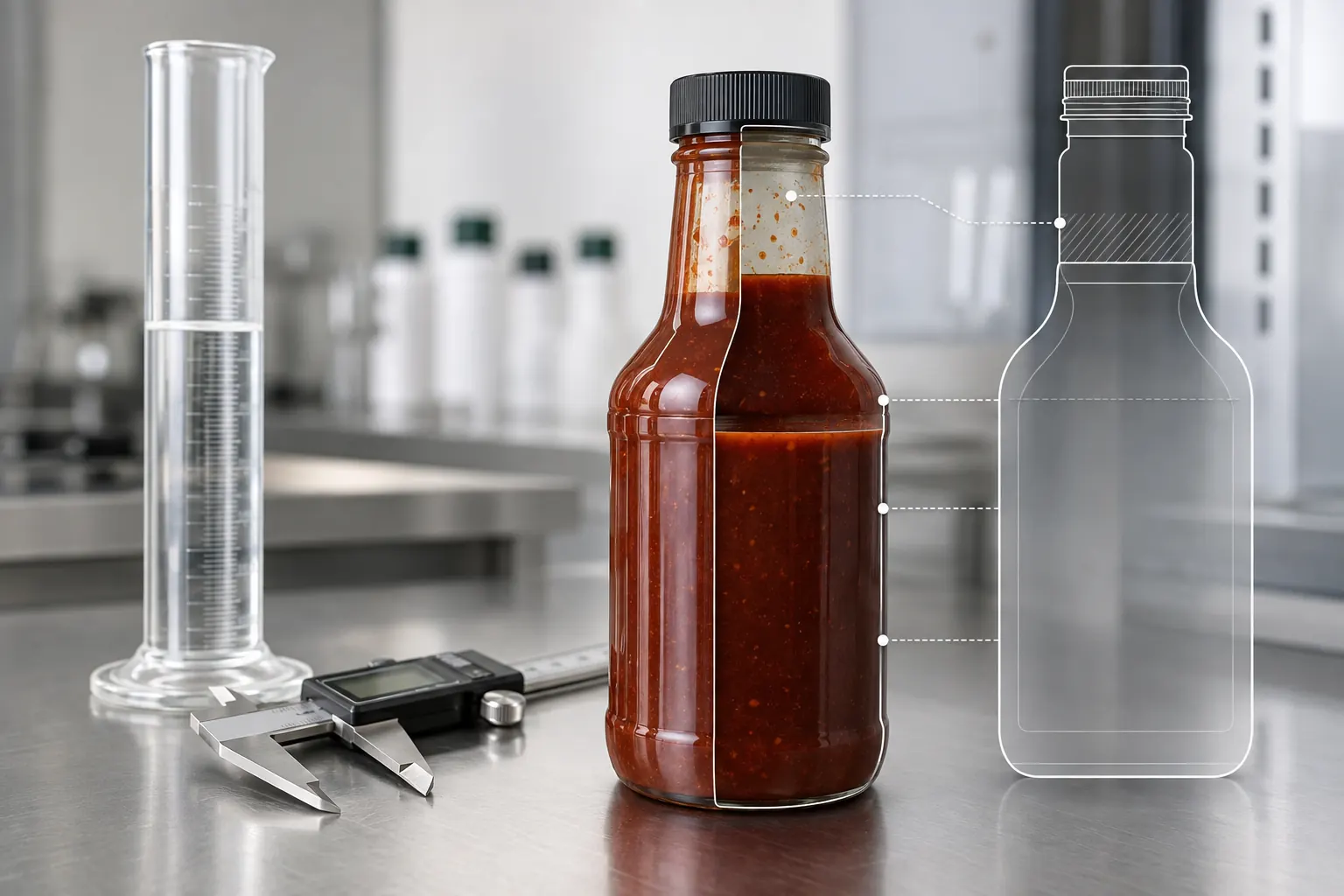
For glass 16 oz routes, freight weight and breakage protection become more visible in landed cost. For PET, HDPE or LDPE routes, the focus moves to wall-thickness distribution, squeeze feel, oxygen barrier needs and cap torque after filling.
32 oz Foodservice BBQ Sauce Bottles: Refill Efficiency and Back-of-House Handling
A 32 oz BBQ sauce bottle holds roughly one quart (946 ml), making it practical for restaurant kitchens, catering lines, food trucks, central kitchens and back-of-house refill programs. The value is not just more sauce per bottle. The larger format can reduce refill frequency, cap changes, carton openings and packaging waste per serving.
Large-format sauce bottles need stronger handling design. A filled quart bottle is heavier, so grip shape, body stiffness, cap diameter and base stability become more important. If the package is squeezed directly by staff, the wall should flex without permanent creasing. If it is used as a refill container, the mouth and cap route should support clean transfer without wasting sauce around the neck.
For foodservice sauce containers, carton design matters as much as bottle design. Cartons must hold filled weight without crushing lower layers, and dividers or layer pads may be needed if caps, shoulders or labels scuff during export movement.
| Foodservice Factor | 32 oz Requirement | Failure if Ignored |
|---|---|---|
| Grip and handling | Comfortable body diameter, shoulder control and cap access. | Drops, slow refill work and staff frustration. |
| Closure route | Wide screw cap, flip-top, nozzle or pump-compatible direction. | Messy refills, leakage or poor portion control. |
| Carton strength | Case count matched to filled gross weight. | Crushed cartons, cap pressure and pallet instability. |
| Storage orientation | Upright, side-lay or cap-down condition defined before sampling. | Slow leaks or cap contamination. |
| Residual sauce | Bottle geometry that drains thick sauce toward the opening. | Higher waste per case and poor cost per usable ml. |
Nominal Capacity vs Brimful Capacity: Why Headspace Changes the Real Fill
Bottle capacity language can create confusion. Nominal capacity is the intended labeled fill, such as 12 oz (355 ml) or 16 oz (473 ml). Brimful capacity is the maximum liquid volume the bottle can hold to the top. The difference between them is headspace, and that space is not optional in many BBQ sauce programs.
Headspace allows for filling accuracy, cap application, sauce expansion, foaming, thermal movement and pressure changes after capping. Hot-fill and warm-fill BBQ sauce can need more careful headspace control because the filled sauce cools and contracts after sealing. If headspace is too small, sauce may foul the sealing surface or leak during capping. If it is too large, the bottle may look underfilled and leave too much oxygen in the package.
Dense BBQ sauce also makes weight conversion important. A 16 oz volume fill does not weigh the same as 16 oz by weight if the sauce density differs from water. A useful specification should define target fill volume, fill weight range, brimful capacity, headspace target and acceptable fill tolerance.
| Capacity Term | Meaning | Why It Matters for BBQ Sauce |
|---|---|---|
| Nominal capacity | The declared fill volume, such as 12 oz or 16 oz. | Used for label claims, shelf positioning and price comparison. |
| Brimful capacity | Maximum bottle volume when filled to the top. | Shows whether the bottle has enough working space above the product. |
| Headspace | Air space between sauce surface and closure after filling. | Controls expansion room, cap cleanliness, oxygen exposure and vacuum behavior. |
| Fill weight | Actual mass of sauce filled into each bottle. | Needed because dense BBQ sauce may not match water-based assumptions. |
| Overflow tolerance | Allowed variation in bottle molded volume. | Protects consistent fill appearance across production batches. |
Pallet Optimization: Cost per ml Depends on Carton Count and CBM
The lowest unit bottle price is not always the lowest landed cost. A larger bottle can reduce cap and label cost per ml, but it may increase carton gross weight, reduce carton count per pallet or waste container space. A smaller bottle can improve trial and shelf variety, but more caps, labels and cartons are needed for the same sauce volume.
For export programs, the useful comparison is cost per saleable filled ml after carton, pallet, freight and damage risk are included. A carton that looks efficient on a drawing can fail if filled bottles press against caps, if the case becomes too heavy for handling, or if the pallet pattern leaves unused voids in the container.
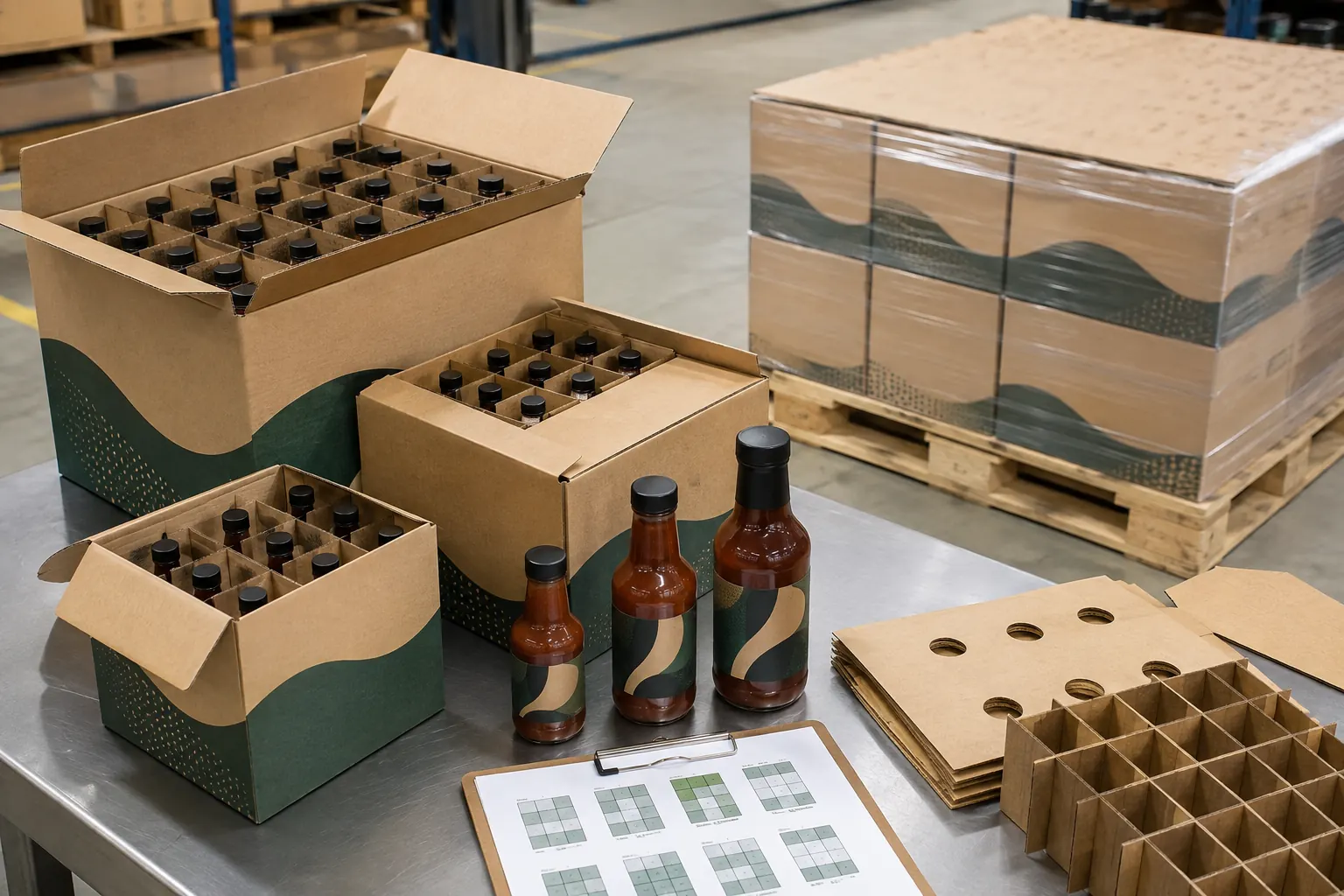
Gracepack reviews carton dimensions, bottle orientation, divider needs, layer pads, gross weight, CBM and pallet pattern with the selected bottle size. This is especially important for 16 oz and 32 oz formats because filled weight and carton compression can change both logistics cost and product condition on arrival.
| Cost Variable | Small Format Effect | Large Format Effect | What to Validate |
|---|---|---|---|
| Cap and label cost per ml | Higher because each bottle carries its own closure and label. | Lower because one closure covers more sauce volume. | Compare full pack cost, not bottle body alone. |
| Carton handling | More bottles and more cells for the same sauce volume. | Fewer units but higher filled carton weight. | Check gross weight and manual handling limits. |
| Pallet density | Can pack tightly but creates more unit handling. | Can cube out or weigh out depending on shape. | Build a pallet pattern before order confirmation. |
| Damage risk | More individual packages to protect. | More mass per bottle and more cap pressure. | Run carton compression and shipment simulation. |
| Usable sauce recovery | Less sauce trapped per bottle but more bottles discarded. | More residue risk if shoulder and squeeze design are poor. | Weigh residual sauce after normal dispensing. |
Material and Closure Choices by BBQ Sauce Bottle Size
Bottle size and material should be selected together. Glass gives premium shelf feel and strong barrier performance, but larger glass bottles add freight weight and breakage risk. PET can provide clear retail presentation with lower package weight, while HDPE and LDPE can improve impact resistance and squeeze function for foodservice or value formats.
For Squeezable BBQ Sauce Bottles, the closure opening must match viscosity and particle size. Thin pourable BBQ sauce may work with a standard screw cap or flip-top route. Thick, sticky or smoky sauces may need a wider nozzle, silicone valve or cap-down format. A 32 oz refill bottle may need a different cap than a 12 oz retail bottle even when the sauce formula is identical.
Food-contact documentation should follow the final component set: bottle body, cap, liner, reducer or valve. Gracepack can support PET FDA and BPA-related routes, EU food-contact routes for PET/PP/PE/silicone components, HDPE and LDPE migration support and ISO 22000 documentation according to the selected material path.
| Size Route | Likely Material | Likely Closure | Best Use |
|---|---|---|---|
| 8 oz | Glass, PET or compact squeeze plastic. | Screw cap, reducer or small flip-top. | Specialty retail, tasting sets and premium flavors. |
| 12 oz | Glass, PET, HDPE or oval retail plastic. | Screw cap, flip-top, liner or controlled opening. | Main grocery shelf and private label BBQ sauce. |
| 16 oz | PET, glass-style PET, HDPE, LDPE or glass. | Flip-top, screw cap, nozzle or valve route. | Family size, value retail and frequent grilling. |
| 32 oz | HDPE, PET, LDPE or larger foodservice container route. | Wide screw cap, flip-top, nozzle or pump-compatible direction. | Restaurant kitchens, catering and back-of-house refills. |
Gracepack Size Development and Factory QC for BBQ Sauce Programs
Gracepack supports BBQ sauce bottle size projects from existing mold screening through custom mold feasibility, cap matching, sample review and export packing. The factory base includes 500+ owned molds, 5,000+ standard bottle designs, 15 automatic injection molding machines, 13 automatic blow molding machines, 9 fully automatic production lines, 3 labeling machines and 5 printing machines.
For a size comparison, the useful first review includes target fill volume, brimful capacity requirement, sauce viscosity, largest particle size, filling temperature, cap type, label size, carton target, destination market and estimated order quantity. That information allows a practical comparison between 8 oz, 12 oz, 16 oz and 32 oz routes before the bottle is quoted as a finished packaging system.
Batch approval should include capacity checks, neck finish measurement, cap torque, leakage testing, filled appearance, label fit, carton count, gross weight and pallet pattern. For retail programs, shelf tray fit and front-facing consistency should be checked. For foodservice programs, refill speed, grip comfort, cap cleanliness and residual sauce should be tested with filled samples.
| QC Item | What Is Checked | Why It Matters |
|---|---|---|
| Capacity control | Nominal volume, brimful capacity and fill appearance. | Prevents underfilled appearance and overflow during capping. |
| Neck finish | Thread engagement, sealing land and cap compatibility. | Protects against leaks and capper inconsistency. |
| Wall distribution | Shoulder, grip panel, base and label-zone stability. | Improves squeeze recovery, shelf shape and carton durability. |
| Carton packing | Divider need, case count, gross weight and CBM. | Controls landed cost and transit damage risk. |
| Retention samples | Approved bottle, cap, label and carton references. | Protects repeat-order consistency. |
FAQ About BBQ Sauce Bottle Sizes
What is the best BBQ sauce bottle size for retail?
For most grocery retail programs, 12 oz (355 ml) and 16 oz (473 ml) are the strongest starting points because they balance shelf value, label area, handling weight and household use frequency.
When does an 8 oz BBQ sauce bottle make sense?
An 8 oz (237 ml) bottle works well for specialty flavors, gift sets, trial packs, spicy sauces and premium small-batch positioning. It usually has a higher packaging cost per ml than larger formats.
Is 16 oz better than 12 oz for BBQ sauce?
A 16 oz bottle can improve value perception and reduce cap cost per ml, but it adds filled weight and may require stronger carton and pallet planning. The better choice depends on shelf target, price point, sauce viscosity and shipping route.
Why use 32 oz bottles for foodservice BBQ sauce?
A 32 oz (946 ml) format reduces refill frequency and packaging units in restaurants, catering and back-of-house kitchens. It should be tested for grip, cap cleanliness, refill speed, leakage and carton compression.
What is the difference between nominal capacity and brimful capacity?
Nominal capacity is the labeled fill volume. Brimful capacity is the maximum liquid volume to the top of the bottle. The difference creates headspace for filling accuracy, thermal movement, capping and appearance control.
What should be sent for a BBQ sauce bottle size sample review?
Send the target size range, sauce viscosity, particle profile, filling temperature, cap preference, label size, carton requirement, destination market and estimated order quantity.
Request BBQ Sauce Bottle Size Samples
Gracepack can compare 8 oz, 12 oz, 16 oz and 32 oz BBQ sauce bottle routes against your sauce formula, retail channel, foodservice use, filling condition, closure preference, label plan and carton target.
Share the target capacity range, sauce viscosity, largest particle size, fill temperature, preferred material, cap route, label size, carton or pallet requirement and destination market. The practical output can include existing mold options, cap matching, sample recommendations, carton pack-out notes and custom mold direction when a standard bottle cannot meet the program.


