
Sustainable BBQ sauce bottle design uses rPET, PCR content and recyclable component choices only when the full package works with the sauce, the filling temperature, the closure, the label and the destination market. A recyclable bottle body alone is not enough if the cap route, label adhesive, tint, odor profile or food-contact documentation breaks the recycling or compliance path.
BBQ sauce creates a harder packaging problem than many clear beverages because it combines tomato solids, vinegar, sugar, smoke flavor, spice particles, oil phases and dark pigments. The right structure has to protect filled appearance, resist flavor pickup, handle squeeze or pour behavior, survive distribution and still make sense for circular packaging rules in Europe, North America and Australia.
| Design Variable | BBQ Sauce Risk | Circular Packaging Requirement | Validation Method |
|---|---|---|---|
| rPET or PCR content | Haze, yellow tone, black specks, odor carryover or variable melt behavior. | Use food-contact qualified recycled resin with controlled visual and odor limits. | Compare filled samples under retail light, run odor checks and confirm resin documentation. |
| Fill temperature | Standard PET and rPET can deform if the filling process exceeds the validated temperature window. | Match cold-fill, warm-fill or hot-fill process to PET, heat-set PET, PP or another validated route. | Filled-bottle thermal trial with cap torque, vacuum and panel inspection after cooling. |
| Closure system | Mixed cap materials, liners or valves can complicate recycling and leakage control. | Select compatible PP, PE, liner, valve or induction-seal routes by market and filling process. | Cap fit, torque, leak, drop and storage-orientation testing. |
| Label and adhesive | Full-wrap labels, metallic decoration or permanent adhesives can reduce sorting and washing efficiency. | Use label area, substrate and wash-off adhesive choices that fit the target recycling stream. | Label wash review, barcode scan, shelf appearance and abrasion checks. |
| Bottle color | PCR tint can look inconsistent beside clear virgin PET bottles. | Use clear, amber, smoky, dark green or opaque design intentionally rather than hiding variation by accident. | Production color standard, filled appearance comparison and retained sample approval. |
Why BBQ Sauce Makes Sustainable Packaging Harder Than a Simple Resin Swap
A BBQ sauce bottle is judged by much more than recycled content. The package has to preserve the sauce's reddish-brown color, protect smoky and acidic aroma notes, dispense a viscous product cleanly and stay stable through carton packing, pallet stacking and e-commerce handling. If the resin change creates odor, haze, poor squeeze recovery or thermal distortion, the sustainability claim will not rescue the package on shelf.
Acid and oil phases also change the review. Vinegar can stress seals and liners, oil can interact with some polymers and spice particles can collect around valves or shoulders. Sugar-rich sauces may be hot-filled or warm-filled, which adds heat, vacuum and shrinkage risk to a recycled-content structure. A good sustainable route starts with the actual sauce formula and process, not the bottle resin name alone.
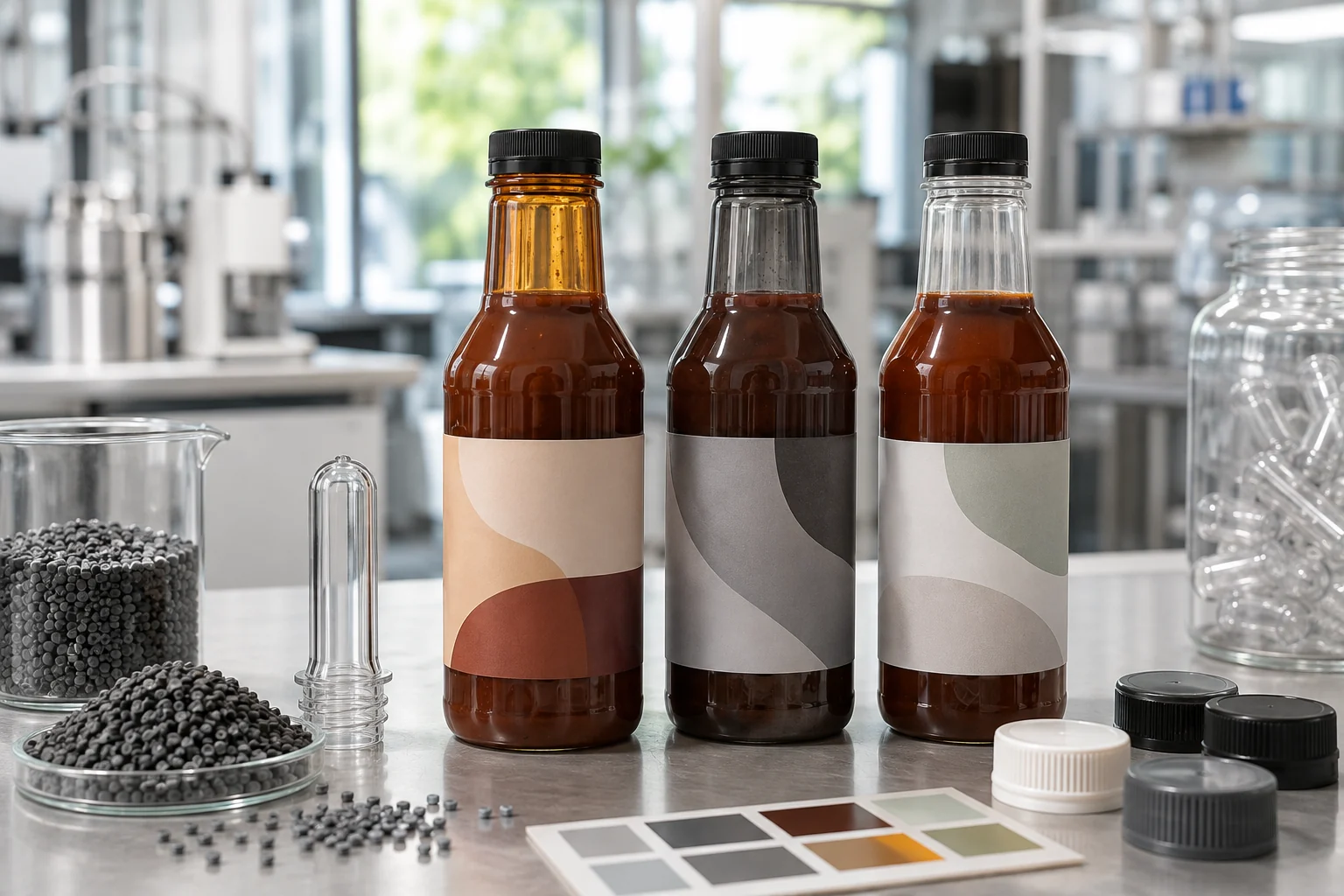
For a brand team, this means the first question is not whether rPET is possible. The first question is whether the bottle, cap, label, carton and filling line can produce a repeatable finished pack with acceptable appearance, leakage control, food-contact support and market-specific recycling communication.
rPET and PCR PET for Clear BBQ Sauce Bottles
rPET is attractive for BBQ sauce bottles because it can keep a clear, glass-like look while lowering virgin PET use. For shelf-driven retail sauces, transparency still matters: consumers can see color, spice load, viscosity and fill level. That is why rPET bottle projects often need a tighter visual standard than opaque detergent or industrial packaging.
The practical limits are color, odor and processing consistency. Recycled PET can carry a slight yellow, gray or smoky tone depending on feedstock and decontamination route. That tint is not automatically a defect, but it must be intentional. Amber, smoky gray or warm-tinted bottle designs can make PCR variation look controlled while still showing the sauce inside.

Food-contact rPET also needs component-level documentation. A statement that a bottle is recyclable does not replace confirmation that the recycled resin route is appropriate for direct food contact in the destination market. For BBQ sauce, the review should cover the resin, colorant, cap, liner, label and any induction-seal structure that touches or protects the product.
Standard PET and rPET are usually strongest for cold-fill, ambient-fill or carefully validated warm-fill programs. When the sauce process moves into hot-fill conditions, the package needs heat-set PET, PP, multilayer engineering or a separate trial route. The risk is not theoretical: under heat and cooling vacuum, a bottle can shrink, panel, ovalize or lose cap torque if it was only qualified at room temperature.
| PET Route | Best Use in BBQ Sauce | Main Advantage | Main Watchpoint |
|---|---|---|---|
| Virgin PET | Clear retail bottles, strong shelf visibility and stable standard production. | High clarity and predictable processing. | Higher virgin resin use and weaker sustainability claim. |
| rPET blend | Retail BBQ sauce where recycled content is required but clarity still matters. | Lower virgin resin use with familiar PET appearance. | Tint, odor, haze and source consistency. |
| High-PCR or 100% rPET route | Programs with strong sustainability positioning and validated resin supply. | Stronger circular packaging story. | Food-contact documentation, visual consistency and thermal validation. |
| Tinted rPET | BBQ sauces where amber, smoky or dark packaging supports brand design. | Masks slight PCR color variation while protecting shelf appearance. | Tint must not hide fill defects or misrepresent product color. |
PCR HDPE and Opaque Routes for Squeezable BBQ Formats
Not every sustainable BBQ sauce bottle needs to be clear. PCR HDPE or opaque PE routes can work well for squeezable formats, foodservice bottles, thicker sauces and brands that prefer a solid-color package. The trade-off is simple: HDPE gives toughness, squeeze feel and acid resistance, while PET gives higher clarity and a more glass-like shelf presence.
Opaque packaging can also make PCR content easier to manage visually. White, black, deep red, amber, forest green and smoked colors can absorb small resin color variations better than crystal-clear packaging. For BBQ sauce, that can be a design advantage rather than a compromise, especially when the label clearly communicates flavor, fill volume and sustainability position.
The squeeze feel still has to be engineered. A bottle with too much stiffness traps sauce in the shoulder and base. A bottle with too little recovery can look dented after use or collapse under carton compression. Wall thickness distribution, shoulder radius, base push-up and grip panels should be reviewed with filled BBQ sauce rather than water because viscosity changes pressure transfer through the bottle wall.
| Material Route | Appearance | BBQ Sauce Fit | Circular Design Note |
|---|---|---|---|
| rPET | Clear to slightly tinted. | Retail bottles where sauce visibility and premium shelf look matter. | Use compatible labels and verify food-contact recycled resin route. |
| PCR HDPE | Natural cloudy or opaque color. | Squeeze bottles, foodservice formats and rugged handling. | Works best when color and label design are planned around opacity. |
| PP | Semi-clear to opaque depending on grade. | Higher-temperature processes and closure systems. | Cap and bottle compatibility can simplify component matching in some routes. |
| Multilayer route | Depends on outer layer. | Shelf-life or barrier-sensitive sauces. | Recyclability needs separate review because mixed layers can affect sorting streams. |
Circular Packaging Requirements in Europe, North America and Australia
Sustainable packaging rules are moving from voluntary claims toward measurable responsibilities. In Europe, brand owners are preparing for stricter packaging waste rules, recycled-content expectations and recyclability requirements. In the United Kingdom, plastic packaging tax rules have made recycled content part of commercial packaging decisions. In Australia, packaging targets and recyclability communication continue to push brands toward clearer design and labeling choices.
The exact requirement depends on destination market, product category, packaging weight, resin type, recycled-content percentage and whether the pack is placed on the market by a brand owner, importer or distributor. Because these rules continue to change, a practical BBQ sauce packaging brief should state the target country before the bottle material is finalized.
For a BBQ sauce brand selling across several markets, the lowest-risk route is to design from the package system outward: bottle resin, cap resin, liner, label substrate, adhesive, tamper band, carton and recycling communication. A package that looks sustainable in one market may still need adjustment for another market if labels, caps or recycled-content claims are handled differently.
| Market Pressure | What It Changes | Packaging Response |
|---|---|---|
| Recycled-content goals | Brands need clearer evidence of PCR or rPET percentage by component. | Define recycled-content target before resin sourcing and sample approval. |
| EPR and packaging fees | Poor recyclability can create higher producer responsibility cost. | Reduce unnecessary material mixes and keep the package easy to sort. |
| Consumer recycling labels | Vague environmental claims are less useful than clear disposal guidance. | Use market-appropriate recycling communication and avoid confusing decoration. |
| Food-contact rules | Recycled content must still be appropriate for food packaging. | Confirm resin, colorant, liner and closure documentation before launch. |
Balancing Clarity, Carbon and Shelf Appeal
A BBQ sauce bottle has to sell from the shelf before anyone reads the sustainability claim. That is why the visual plan matters. A clear rPET bottle works when the sauce color is attractive and the resin supply can hold a clean appearance. A smoky or amber rPET bottle works when the brand wants a warmer barbecue look and needs to control slight PCR tint. An opaque PCR HDPE bottle works when squeeze function, durability and recycled-content messaging matter more than seeing the sauce through the wall.
The label should support that decision. Heavy label coverage can hide color variation but may weaken recyclability if the substrate, adhesive or ink system is poorly chosen. Small labels improve bottle visibility but expose every resin tint and sauce color shift. Full-wrap decoration can create strong shelf blocking, but it needs a recycling review before the artwork is locked.
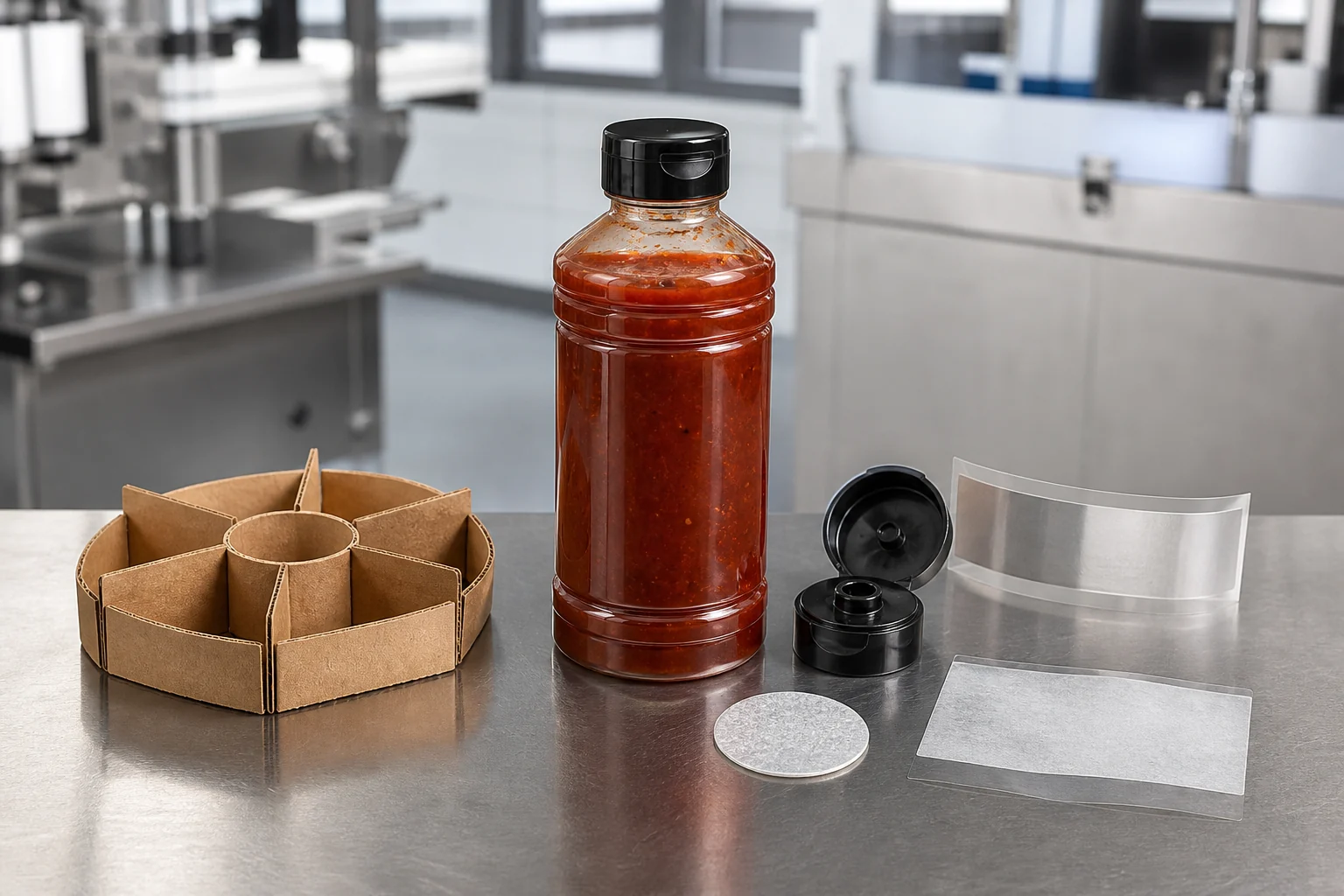
For premium BBQ sauce, the best result often comes from matching the visual language to the material route: warm amber for smoked sauces, clear rPET for bright tomato-rich sauces, dark-tinted bottles for spicy or molasses-heavy recipes and opaque squeeze formats for foodservice or family-size use.
Closure, Label and Adhesive Choices Decide Recyclability
A recyclable bottle body can be undermined by the wrong closure or label. For PET bottle routes, cap material, liner choice, tamper evidence and label substrate should be checked against the recycling path in the target market. For squeeze bottles, valve systems and flip-top caps add convenience, but they also add component complexity that should be reviewed before the sustainability claim is printed.
Wash-off adhesives are especially important when a brand wants the bottle to re-enter a PET recycling stream. If the label does not release cleanly in the wash process, adhesive residue and ink can affect recycled flake quality. A smaller label, compatible substrate or different adhesive can sometimes improve circularity more than raising PCR content by a few percentage points.
Induction seals and liners also deserve attention. They can protect freshness and leakage performance, but they must match the cap, neck finish and filling process. BBQ sauce is viscous and often acidic, so seal selection should be validated with filled samples, storage orientation and shipping simulation rather than judged from an empty bottle alone.
| Component | Common Mistake | Better Review Question |
|---|---|---|
| Bottle body | Choosing rPET percentage before confirming fill temperature and food-contact route. | Can this recycled-content structure survive the actual fill, storage and shipping conditions? |
| Cap and liner | Treating the cap as a generic accessory. | Does the closure material, liner and torque range support leakage control and recycling goals? |
| Label | Using a premium full-wrap design without wash or sorting review. | Will the label and adhesive release or sort correctly in the destination market? |
| Tamper band | Adding a different material without checking removal and disposal behavior. | Does tamper evidence protect the product without confusing end-of-life handling? |
| Carton | Ignoring secondary packaging when calculating sustainability. | Can the carton protect filled bottles with less material and better pallet efficiency? |
Gracepack Qualification Route for Sustainable BBQ Sauce Bottles
Gracepack can support BBQ sauce bottle programs from a food-grade condiment packaging manufacturing base with more than 500 owned molds, more than 5,000 standard bottle designs, 15 automatic injection molding machines, 13 automatic blow molding machines, 9 fully automatic production lines, 3 labeling machines and 5 printing machines. This matters because a sustainable bottle decision often involves bottle body, closure, label, color, carton and sample validation at the same time.
For rPET and PCR BBQ sauce packaging, a useful sample review includes bottle size, resin route, color standard, closure type, liner or induction-seal plan, label area, carton count, gross weight, destination market and filling temperature. The goal is to approve a finished packaging system, not only an attractive empty bottle.
Available support can include PET FDA and BPA-related routes, EU food-contact routes for PET, PP, PE and silicone components, HDPE and LDPE migration support, ISO 22000 documentation and enterprise standards for food-grade plastic bottles and caps. The final document set should match the actual resin, colorant, cap, liner and market route selected for the project.
| Review Step | What Gracepack Checks | Why It Matters |
|---|---|---|
| Formula and process | Sauce viscosity, acidity, oil phase, pigment load and fill temperature. | Prevents selecting a recycled-content bottle that looks good empty but fails when filled. |
| Material route | Virgin PET, rPET blend, high-PCR PET, PCR HDPE, PP or tinted structures. | Balances clarity, squeeze feel, heat resistance and circular packaging goals. |
| Component matching | Cap, liner, valve, induction seal, label and tamper band. | Protects leakage control, food-contact support and recycling communication. |
| Production approval | Color, dimensions, wall distribution, label fit, carton packing and retained samples. | Keeps repeat orders consistent after the first batch is approved. |
FAQ About Sustainable BBQ Sauce Bottle Design
What is the best sustainable material for BBQ sauce bottles?
The best starting point is usually rPET when clear shelf visibility is important, PCR HDPE when squeeze durability and opacity are acceptable, or PP when higher-temperature processing is part of the packaging route. The final choice depends on sauce formula, fill temperature, closure system and destination-market requirements.
Can BBQ sauce use 100% rPET bottles?
It can be possible when the rPET source, food-contact route, appearance standard and filling conditions are validated. For hot-fill BBQ sauce, the package may need heat-set PET, PP or another qualified structure instead of standard rPET.
Does PCR content affect bottle color?
Yes. PCR and rPET can introduce slight yellow, gray, smoky or speckled variation. Many BBQ sauce programs handle this by choosing amber, smoky, dark-tinted or opaque packaging so the sustainability route looks intentional on shelf.
Are caps and labels part of sustainable bottle design?
Yes. The bottle body, cap, liner, adhesive, label substrate and tamper evidence all affect recycling, leakage control and consumer disposal instructions. A circular packaging claim should be checked at component level.
What should I send for a sustainable BBQ sauce bottle sample review?
Send the target bottle size, sauce viscosity, pH if available, oil content, fill temperature, shelf-life target, preferred PCR or rPET percentage, destination markets, closure preference, label concept and annual order volume.
Request rPET and PCR BBQ Sauce Bottle Samples
If your BBQ sauce program needs recycled-content packaging, the practical next step is a component-level sample review. Gracepack can compare clear rPET, tinted rPET, PCR HDPE, PP and closure routes against your sauce viscosity, filling process, shelf appearance and destination-market requirements.
Share the target bottle size, fill temperature, sauce type, cap route, label direction, PCR target and launch market. Gracepack can prepare a sample path, color and closure recommendation, documentation checklist and RFQ route before mass production.


