
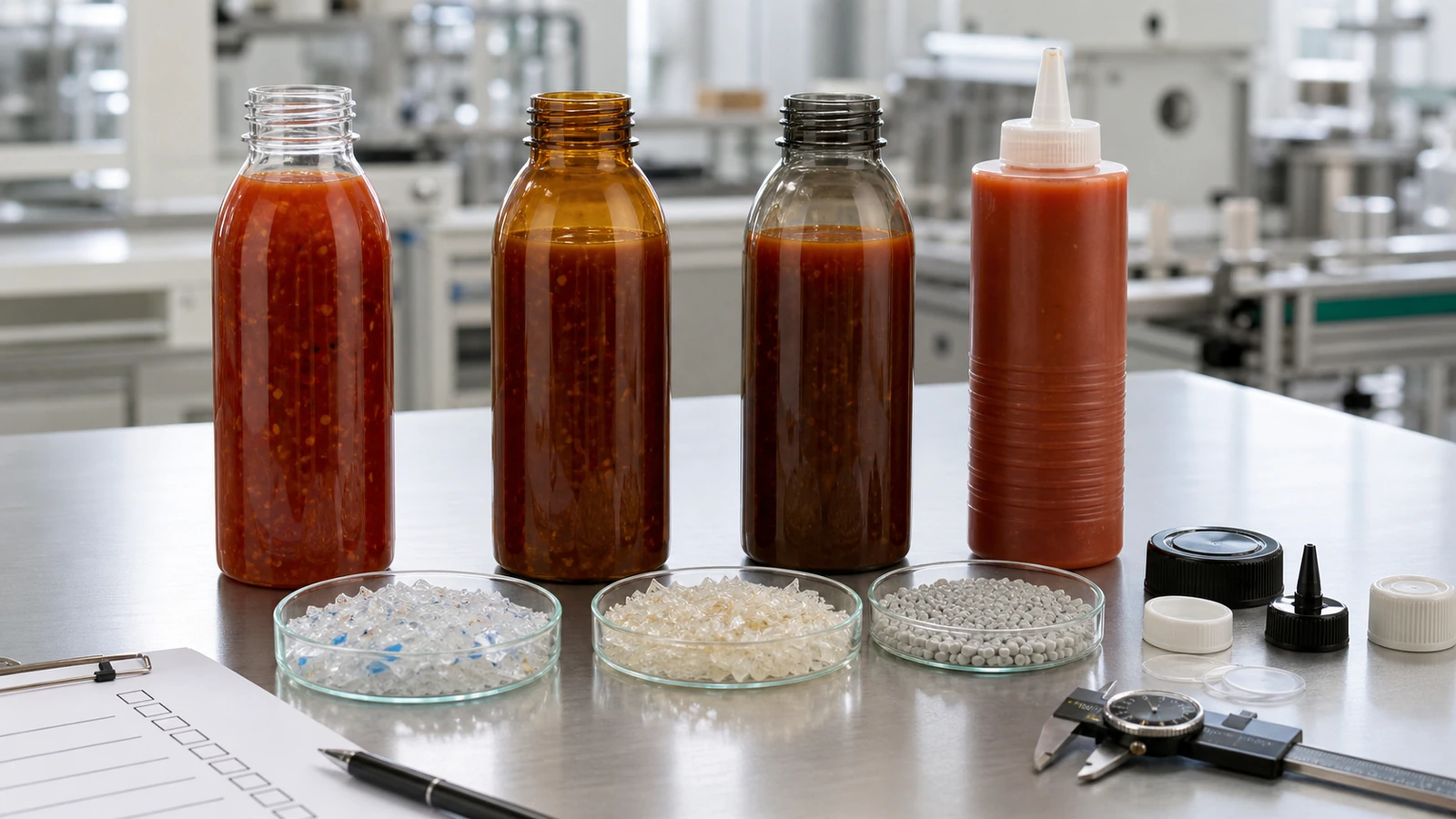
Sustainable hot sauce packaging can use PCR plastics when the recycled resin route, food-contact status, bottle material, filling temperature, cap system, barrier target and label claim are validated as one package. rPET usually supports clearer retail presentation, while rHDPE and PCR polyolefin routes are stronger for opaque or soft squeeze formats where drop resistance and hand feel matter more than glass-like clarity.
The strongest PCR projects do not begin with a recycled-content percentage alone. They begin with the sauce chemistry, target market, retail claim, filling process and closure route, then decide whether 30%, 50% or a higher PCR load can pass appearance, odor, migration-document, leakage, shelf-life and packing checks.
| Decision Area | Practical PCR Direction | Hot Sauce Packaging Risk | Validation Method |
|---|---|---|---|
| Regulatory target | Many teams begin around a 30% PCR target where policy or retailer requirements point in that direction. | A percentage target can fail if it is not documented by component and market. | Confirm recycled-content target, resin source, bottle component scope and destination-market expectations. |
| Food contact | Use food-contact reviewed PCR resin routes for direct sauce contact. | Generic recycled-content claims do not prove suitability for acidic, oil-bearing hot sauce. | Match PCR resin, recycling process, material report, intended food type, time and temperature. |
| Clarity and color | Use rPET for clear display, smoke or amber tint for managed PCR tone, or rHDPE for opaque squeeze packs. | Yellowing, haze or specks can make red sauce look aged before sale. | Review filled samples under shelf lighting, label coverage and batch-to-batch color limits. |
| Odor and sensory | Screen PCR resin for low odor before committing to retail hot sauce bottles. | Residual odor can conflict with vinegar, garlic, chili oil or fermented notes. | Run empty-bottle odor review, filled storage and sensory checks after aging. |
| Heat and filling | Use cold-fill, warm-fill or heat-tolerant structures according to the actual process. | Standard PET can deform when filling temperature exceeds its practical window. | Test bottle ovality, paneling, neck finish and cap torque after filled cooling. |
| Barrier and shelf life | Use PET, darker color, liner selection or barrier-oriented structures when color and aroma retention matter. | PCR alone does not guarantee oxygen or moisture performance. | Check oxygen sensitivity, oil phase, headspace, induction-seal route and storage orientation. |
| Consumer claim | Use specific claims such as percentage, component and disposal instruction. | Broad sustainability language can create retailer, legal or trust risk. | Align package artwork, resin code, QR support and documentation before launch. |
The Green Packaging Mandate in Europe and North America
PCR has moved from a brand-positioning idea into a procurement requirement. In Europe, recycled-content pressure is tied to packaging waste reduction, producer responsibility and country-level plastic packaging rules. In the United Kingdom, plastic packaging with less than 30% recycled plastic can fall under Plastic Packaging Tax rules, which makes the 30% threshold a practical planning point for many food packaging teams.
North American requirements are more fragmented, but the direction is similar. Extended producer responsibility programs, retailer scorecards and corporate ESG targets increasingly ask for component-level packaging data rather than a general environmental promise. Australia follows the same practical logic through recyclable packaging expectations, recycled-content targets and on-pack disposal communication.
For hot sauce brands, the mandate has an engineering cost. A bottle can satisfy a recycled-content target and still fail on shelf if PCR tint changes the sauce color, if resin odor is noticeable, if cap torque changes after filling, or if the selected liner is not compatible with the bottle material. A sustainable package has to protect the sauce first; the recycled-content claim comes after the physical package works.
rPET and rHDPE in Food-Grade Hot Sauce Containers
rPET is usually the first route to evaluate when a hot sauce brand wants clear shelf display. It keeps the product visible, supports crisp label presentation and can work well for cold-fill or controlled warm-fill sauces when the bottle design and filling window are appropriate. The trade-off is that rPET quality can vary by feedstock, intrinsic viscosity, color, haze and odor, so the finished bottle should be reviewed with real red sauce inside it.
rHDPE and PCR polyolefin routes suit brands that care more about squeeze feel, impact resistance and controlled opacity. A natural or opaque HDPE bottle can hide PCR tint better than clear PET, and it can feel more familiar for foodservice or family-size squeeze formats. The trade-off is lower transparency and, depending on formulation, a different oxygen barrier profile than PET.
A practical PCR range is not universal. A 30% target is often the first commercial checkpoint because it may align with policy or retailer expectations while leaving room to protect clarity and mechanical behavior. A 50% route can be realistic when resin quality is stable and the bottle has enough wall support. A 100% PCR target should be treated as a validation project, especially for clear retail hot sauce bottles where odor, color and neck finish are visible and measurable.
| PCR Target | Best-Fit Bottle Route | Typical Engineering Concern | Commercial Use Case |
|---|---|---|---|
| About 30% | rPET clear bottle or PCR HDPE squeeze bottle. | Lower risk starting point, but still needs odor, color and cap-fit review. | Retail programs responding to recycled-content expectations without changing the whole bottle identity. |
| About 50% | Controlled rPET blend, smoke-tinted PET, amber PET or opaque rHDPE. | Greater chance of tint, haze, stiffness change and batch variation. | ESG-focused brands willing to adjust color, label coverage or package feel. |
| 70% to 100% | Opaque rHDPE, dark-color bottle, selected rPET route after resin qualification. | Higher risk of odor, color drift, process instability and appearance variation. | Programs where the sustainability claim is a central shelf message and testing budget is planned. |
| Virgin/PCR multilayer or blend route | Project-specific bottle structure when barrier or appearance must be controlled. | Recycling stream, food-contact scope and claim wording must be checked carefully. | Sauces that need better clarity, barrier balance or stronger process control than a simple PCR blend. |
Food-Contact Compliance: PCR Is a Process and Supply-Chain Question
Food-grade PCR is not defined only by the resin name. It depends on the recycled feedstock stream, sorting quality, washing and decontamination process, intended food type, contact time, contact temperature and the final package structure. A hot sauce bottle also has acidic vinegar, chili pigments, salt, oil phases and sometimes fermented aromatics in contact with the container for months, so the review has to be stricter than a short-contact dry product pack.
For the bottle body, PCR resin support should be separated from standard virgin-resin documentation. For the closure system, the cap, liner, reducer, silicone valve, induction foil and color masterbatch may each carry a different material scope. A clear rPET bottle with a PP cap and PE liner is not one compliance item; it is a component set.
Gracepack can align bottle and closure projects with PET FDA and BPA-related support, EU food-contact routes for PET, PP, PE and silicone components, HDPE and LDPE food-contact review routes, ISO 22000 supplier documentation and enterprise standards for food-grade plastic bottles and caps after the actual packaging structure is selected. That documentation discipline helps prevent a recycled-content claim from being approved faster than the package can be responsibly qualified.
| Component | Document Scope to Confirm | Why It Matters for PCR Hot Sauce Packaging |
|---|---|---|
| Bottle body | PCR resin route, PET or HDPE material support, colorant scope and intended contact condition. | The sauce touches the bottle wall for the full shelf-life period. |
| Cap | PP or PE food-contact support, thread compatibility and color route. | Cap material affects torque, leakage and consumer opening feel. |
| Liner or induction seal | Material compatibility with PET, HDPE or glass and sauce contact condition. | The mouth seal controls leakage, oxygen ingress and first-opening freshness. |
| Reducer or valve | PE, PP or silicone component support and flow-control compatibility. | Small dispensing parts can contact acidic sauce and retain residue. |
| Label and claim | Recycled-content percentage, resin code, disposal wording and retailer documentation. | The sustainability message must match the actual component route. |
Overcoming Color Imperfections Without Hiding the PCR Story
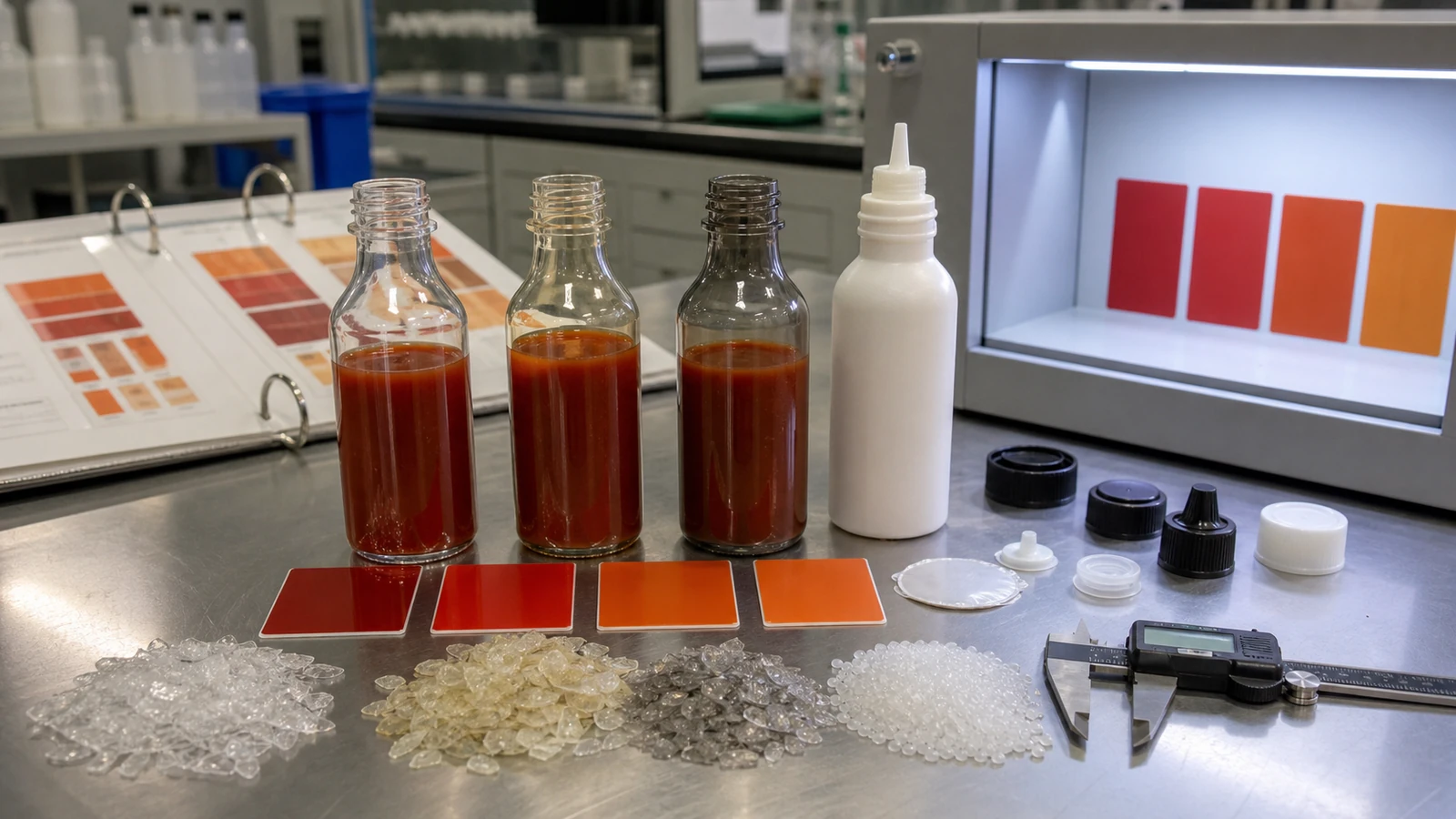
PCR resin can carry a slight yellow, gray or smoke tone. In a clear hot sauce bottle, that tone can shift the perceived color of a bright red sauce. The problem is not cosmetic only. If the sauce looks dull under store lighting, consumers may read the package as older or less fresh even when the formula is stable.
There are several practical design routes. Amber PET can protect warm chili tones and make slight PCR yellowing feel intentional. Smoke tint can signal a premium or sustainable pack while reducing visible specks. Dark green, brown or black-tinted bottles can fit fermented, smoked or extra-hot sauces where full clarity is not the main selling point. Opaque rHDPE works when the brand wants squeeze performance and recyclability communication more than product visibility.
Label coverage should be decided after filled-sample review. A tall front label may hide PCR variation, but it also reduces sauce visibility. A narrow label preserves the color window, but it exposes more resin tint. The right answer depends on whether the brand story is built around the sauce color, the sustainable material, or the dispensing format.
| Appearance Route | Where It Works | What to Check |
|---|---|---|
| Clear rPET | Fresh red sauces where product color drives shelf appeal. | Haze, yellow tint, odor, label edge visibility and batch variation. |
| Amber or honey tint | Chili oils, smoked sauces and warm-toned pepper sauces. | Whether the tint improves color perception without making the product look darker than intended. |
| Smoke tint | Modern sustainable packaging where PCR character can be part of the identity. | Speck visibility, barcode contrast and retailer acceptance. |
| Opaque rHDPE | Foodservice, family-size or squeeze formats where durability matters. | Label communication, squeeze recovery, resin code and cap material compatibility. |
| Large label coverage | Private-label or ESG-focused retail packs needing stable shelf presentation. | Whether the recycled-content claim remains clear without overpromising recyclability. |
Heat, Barrier and Hot Sauce Chemistry Risks
Hot sauce is demanding because it combines acidity, pigment, aromatics, salt and sometimes oil. Vinegar can stress weak material choices, chili oil can hold capsaicin-rich compounds against closures, and garlic or fermented notes can expose unwanted package odor. PCR does not create all of these risks, but it can make them more visible if the resin stream is inconsistent.
Filling temperature is one of the first gates. Standard PET and rPET should not be treated as automatic hot-fill materials. If the sauce is filled warm, the bottle should be checked for shoulder deformation, neck ovality, base stability and cap torque after cooling. HDPE can offer toughness and squeeze feel, but opacity and barrier profile need to be accepted. PP can support higher heat in some component routes, especially closures, but the complete bottle structure still has to match the sauce and line process.
Barrier behavior should be tested with the final package. PET generally provides better gas barrier than HDPE, but a liner, induction seal, headspace, cap fit and storage orientation can change the real shelf-life result. For bright red sauces, oxygen exposure can dull color and flatten aroma. For oil-rich sauces, closure compatibility and residue control often matter as much as bottle wall material.
Communicating Sustainability to End Consumers
A strong sustainability message is specific. Instead of broad claims, use the actual PCR percentage, the component it applies to and the disposal instruction for the target market. A bottle-body claim should not imply that the cap, liner, valve, label and tamper feature all contain the same recycled content unless the full package supports that statement.
Resin identification also matters. PET is commonly associated with the #1 recycling code and HDPE with #2, but the final recycling outcome depends on local collection, color, label material, cap choice and contamination. A QR code can help explain the PCR percentage, bottle material and recycling instruction without forcing too much text onto a curved label panel.
For ESG-focused procurement teams, the cleanest communication package is usually a short claim backed by a document set: recycled-content target, component map, food-contact support, sample photos, carton specification and quality control checkpoints. That gives marketing enough language for the label and gives procurement enough evidence for retailer or internal review.
| Claim Type | Stronger Wording Direction | Avoid |
|---|---|---|
| PCR content | Bottle made with 30% PCR PET, when supported by the selected component route. | Recycled packaging, if only the bottle body has PCR content. |
| Recyclability | PET bottle with compatible cap and label direction for target-market recycling review. | 100% recyclable, unless the full package and market route support it. |
| Food contact | Food-contact reviewed PCR route for the intended sauce and filling condition. | Food safe PCR, without process and component scope. |
| Carbon or footprint | Reduced virgin plastic use through verified PCR content. | Exact carbon reduction numbers without project-specific LCA support. |
Gracepack PCR Sample Validation Workflow
PCR hot sauce packaging is easiest to qualify when the first sample plan compares controlled alternatives rather than a single bottle. A practical sample set may include a current virgin-resin baseline, a lower-PCR blend, a higher-PCR blend and one color-adjusted route. Filled samples then show what empty samples cannot: real sauce color, odor interaction, label contrast, cap fit, leakage and shelf appearance.
Gracepack supports this work from a food-grade packaging manufacturing base with 500+ owned molds, 5,000+ standard bottle designs, 15 automatic injection molding machines, 13 automatic blow molding machines, 9 fully automatic production lines, plus labeling and printing support. For PCR projects, that means the bottle, cap, liner, color, label and carton can be reviewed together before a brand commits to a large-volume route.
The most useful starting information is simple: sauce type, viscosity, pH if available, oil level, filling temperature, target capacity, PCR percentage target, desired bottle clarity or color, cap or liner route, destination market, annual volume and any retailer sustainability language. With those details, Gracepack can recommend a standard mold path or a custom sample direction for PCR feasibility review.
| Validation Step | What Gracepack Reviews | Output for the Packaging Team |
|---|---|---|
| Material screening | rPET, rHDPE or PCR blend route against sauce type and appearance target. | Shortlist of bottle material and PCR percentage routes. |
| Filled sample check | Color, haze, odor, squeeze feel, cap torque, leakage and storage orientation. | Physical comparison samples for internal approval. |
| Closure matching | PP/PE cap, liner, reducer, silicone valve or induction-seal route. | Bottle-and-cap direction that matches use and shipment risk. |
| Document mapping | Factory, material, component and destination-market document needs. | Clear list of documents to confirm before purchase order. |
| Scale-up review | Mold family, MOQ direction, carton packing, label route and reorder consistency. | A practical path from ESG target to repeatable packaging supply. |
FAQ About Sustainable Hot Sauce Packaging and PCR Plastics
Can PCR plastic be used for food-contact hot sauce bottles?
PCR plastic can be reviewed for food-contact hot sauce bottles when the recycled resin source, recycling process, intended food type, filling temperature, contact time and final package structure are confirmed. The PCR route should be matched to the actual bottle, cap and liner components before commercial claims are made.
Is rPET or rHDPE better for hot sauce packaging?
rPET is usually better when clear shelf display and bright sauce color matter. rHDPE is usually better when opacity, impact resistance, squeeze feel and durability matter more than product visibility.
Is 100% PCR realistic for hot sauce bottles?
A 100% PCR target may be possible for selected projects, especially opaque or dark-color routes, but it should be treated as a validation program. Clear hot sauce bottles often need stricter checks for haze, tint, odor, neck finish, cap fit and batch consistency.
Does PCR affect hot-fill performance?
PCR can affect thermal behavior, stiffness, shrinkage and visual stability, so it should not be assumed to perform like virgin resin. Any warm-fill or hot-fill project should test filled bottles for deformation, paneling, cap torque and leakage after cooling.
How can brands handle PCR color tint?
Brands can use amber, smoke, dark-tinted or opaque bottle routes, adjust label coverage, choose a cap color that makes the package look intentional and review filled samples under retail lighting before approving artwork.
What should I send for a PCR hot sauce bottle sample review?
Send the sauce type, pH if available, oil content, viscosity, filling temperature, target PCR percentage, bottle size, preferred clarity or color, cap route, destination market, annual volume and any sustainability claim you want to use on the label.
Request a PCR Hot Sauce Bottle Sample Review
If your hot sauce program needs recycled-content packaging, the next step is a filled-sample review rather than a generic bottle quote. Gracepack can compare rPET, rHDPE, amber, smoke, opaque and standard resin routes against your sauce formula, filling condition, closure system and destination-market document needs.
Share the target PCR percentage, sauce viscosity, fill temperature, cap or liner direction, bottle size range, annual volume and sustainability claim. The practical output can include a sample route, closure recommendation, document map and validation checklist before mass production.


